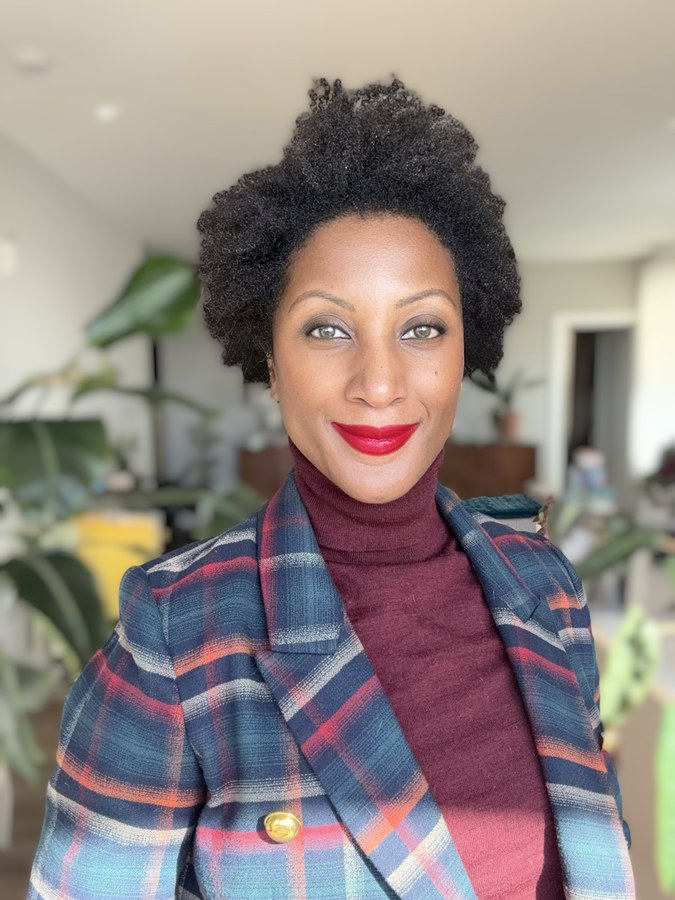
I'm an Organizational Architect and the Chief Operating Officer at HealthConnect One, a national birth equity organization entering its 40th year. I lead enterprise operations across people, finance, systems, communications, development, and partner relationships — at the intersection of financial stewardship, operational excellence, and equity-centered design.

Most executives choose one lane. I've built my career on refusing that false choice.

Here's what I'm seeing across the field: most mission-driven organizations are optimized for compliance, not transformation. They measure what's easy rather than what matters. Operations gets framed as administrative friction instead of organizational fascia — the connective tissue that makes mission possible. I spend my days proving the alternative is not just possible, but more sustainable.

I started in banking — and it shapes everything I build.

Before I led people and operations, I was a Vice President at Chase Bank, managing a $98M depository portfolio and an 18-person team. I learned to read a balance sheet the way some people read literature — with attention to what's said, what's unsaid, and what the numbers are quietly trying to tell you.

That fluency in finance is rare in nonprofit operations. It shapes everything I build now. I read a P&L and a culture survey with the same rigor.

Numbers and people aren't competing languages. They're the same language, spoken at different volumes.

Seventeen years across banking, fintech, F&B operations, and mission-driven organizations taught me that financial stewardship and human dignity aren't competing priorities. They're prerequisites. Compliance isn't the ceiling — it's the foundation everything transformative gets built on.

Four principles I build by.

Every system I design, every decision I make, every engagement I take — these are the four propositions underneath the work.

i.

Compliance isn't the ceiling — it's the foundation.

Most organizations treat compliance as the destination. They hit minimum standards and call it done. I treat compliance as the starting line — the floor that everything transformative gets built on top of. Risk management, legal alignment, multi-state requirements: these aren't constraints on mission. They're the conditions that make ambitious mission work survivable.

ii.

Operations done well is liberation, not administration.

Operations is too often framed as the work that slows everything down. I've spent my career proving the opposite. Done well, operations is what lets people do the work they were hired to do. It's what frees executives from putting out fires. It's what lets a forty-year organization keep going for forty more.

iii.

Trust is the real operating system.

You can have the best technology stack, the cleanest documentation, the most elegant org chart — and none of it will function without trust. Trust is what makes people raise concerns before they become crises. It's what makes feedback honest, decisions faster, and conflict productive. Every system I build is engineered with trust as the underlying protocol.

iv.

Infrastructure is a form of care.

Building good infrastructure is how we tell the people inside an organization: your time matters, your judgment matters, your work matters enough to make easier. The absence of infrastructure isn't neutral. It tells people they're on their own. The presence of it — clear processes, fair systems, honest scaffolding — is care made structural.

I lead the unglamorous, foundational work that makes ambition real.

Most of my work doesn't make the highlight reel. It rarely shows up in keynotes or LinkedIn posts. It's the architecture beneath the architecture — the work that lets everything else hold.

Janessa Mondestin
Charlotte

A Cuban-Haitian Muslimah building from Charlotte.

I'm a Cuban-Haitian Muslimah, a daughter of two diasporas, born and raised in New York City, building from Charlotte, North Carolina. My identity isn't separate from my work — it's the lens through which I see organizations, the reason I notice what gets left out, and the reason I refuse the false choices most leaders accept.

I bring my whole self to the table. I expect organizations to do the same.

My thinking sits in conversation with —

No idea worth holding emerged from a single mind. The frameworks I build are indebted to thinkers who taught me how to see organizations as living systems and equity as architectural, not decorative.

adrienne maree brown

Emergent strategy. Decentralized leadership. The wisdom of small, fractal change.

bell hooks

Frameworks for equity-centered design. The pedagogy of liberation made institutional.

Somatic & emergent leadership

Practices that honor the body, the slow build, and the truth that systems are felt before they are named.

You're building something that asks more than the field expects of it.